

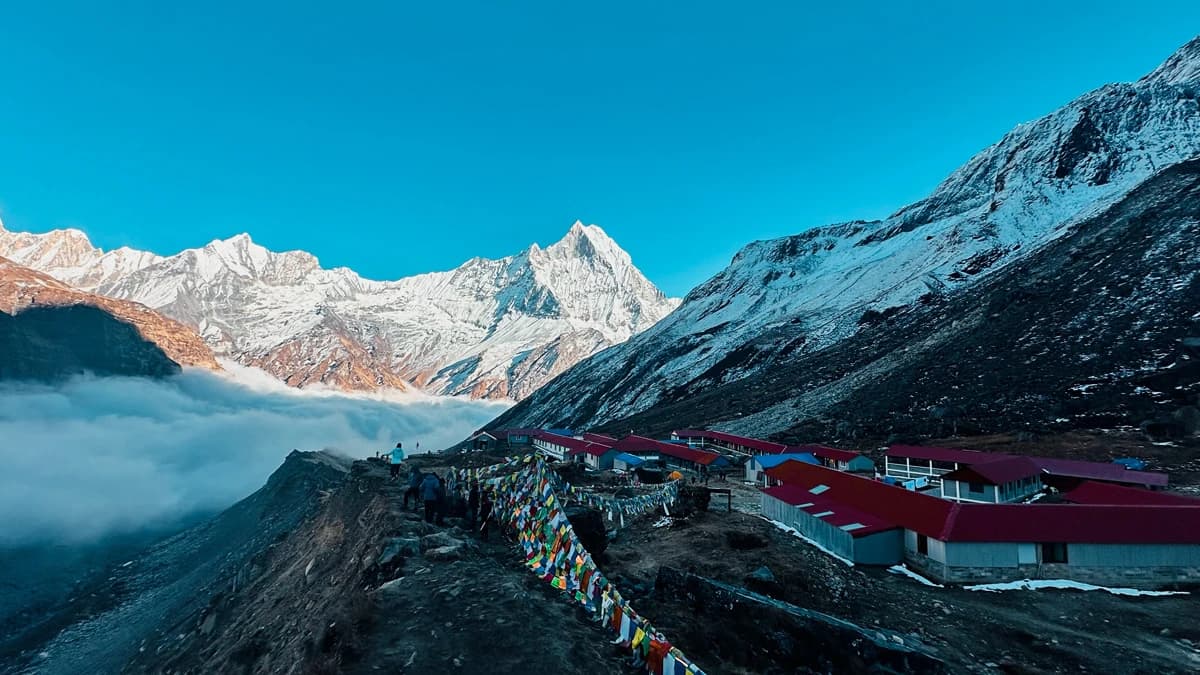
When people imagine the Himalayas, one image usually comes to mind—towering white mountains beneath a bright blue sky.
It’s a beautiful picture.
But it’s only one chapter of the story.
The Annapurna Base Camp Luxury Trek is a journey through an ever-changing canvas where every increase in elevation introduces a new collection of colors. Deep green forests gradually give way to rugged gray cliffs, colorful mountain villages brighten the valleys, and eventually brilliant snow-covered peaks dominate the horizon.
What’s fascinating is that these changes aren’t random.
They’re shaped by altitude, climate, vegetation, sunlight, and the remarkable geography of the Annapurna region.
As you walk higher into the mountains, nature quietly becomes the artist.
The Deep Greens That Welcome You Into the Himalayas
The lower sections of the trek are filled with life.
Towering trees stretch overhead, creating shaded pathways that feel worlds away from the rocky landscapes many people associate with the Himalayas.
Oak forests, bamboo groves, and rhododendron woodlands dominate the scenery, producing countless shades of green that shift throughout the day as sunlight filters through the leaves.
Rather than offering dramatic mountain views immediately, these forests introduce the journey gradually.
They encourage you to slow down, breathe deeply, and notice the richness of the environment before the higher peaks reveal themselves.
A Living Landscape That Changes With Every Season
Green isn’t just one color here.
During spring, fresh leaves create bright, vibrant forests full of new growth.
In the summer months, rainfall deepens the landscape into richer shades of emerald.
Autumn brings subtle golden tones alongside the remaining greenery, while winter offers quieter forests where evergreen trees stand out against cooler surroundings.
Each season paints the trail differently, ensuring that no two Annapurna trekking experiences ever look exactly the same.
Bright Bursts of Color Hidden Along the Trail
While forests provide the dominant backdrop, small details often attract just as much attention.
Prayer flags flutter in vibrant blue, white, red, green, and yellow.
Wildflowers appear unexpectedly beside stone paths.
Traditional homes display colorful window frames and carefully tended gardens.
These moments provide striking contrasts against the natural landscape.
Instead of overwhelming the scenery, they complement it, reminding visitors that people and nature have shared these mountain valleys for generations.
The Meaning Behind the Prayer Flags
For many first-time visitors, prayer flags are among the most recognizable sights in Nepal.
Their five colors are deeply connected to Himalayan Buddhist traditions, with each representing different natural elements and values.
As mountain winds carry the flags across ridgelines and villages, they become both a cultural symbol and a visual reminder of the region’s spiritual heritage.
Where Green Slowly Gives Way to Stone
As the trail climbs higher, the scenery begins to change.
Dense forests become less common.
Trees gradually grow smaller.
Rock formations become more prominent.
The transition happens so naturally that many trekkers don’t notice it at first.
Then one morning, you realize the landscape has transformed.
Instead of walking beneath a forest canopy, you’re surrounded by dramatic cliffs, open valleys, and rugged mountain slopes.
This changing environment is one of the defining characteristics of alpine trekking.
Each step upward reveals another layer of the Annapurna landscape.
Gray Mountains Tell Ancient Stories
Although gray may seem like a simple color, it reveals some of the oldest chapters in Himalayan history.
The rocky cliffs and exposed mountainsides surrounding the trail were shaped over millions of years through powerful geological forces.
Layers of stone record the formation of one of the world’s youngest mountain ranges, while rivers continue carving valleys through the landscape today.
Looking closely, you’ll notice that gray isn’t uniform.
Some cliffs appear almost silver under the morning sun.
Others display darker tones after rainfall.
Certain rock faces reveal hints of brown, orange, or even green where minerals interact with moisture and vegetation.
These subtle variations add remarkable depth to the Himalayan scenery, rewarding travelers who take the time to observe carefully.
Where White Becomes the Dominant Color
As you climb higher into the Annapurna Sanctuary, another transformation begins.
The forests are now far below.
Towering peaks rise in every direction.
During much of the year, snow covers the highest mountains, creating a striking contrast against the darker rock faces beneath them.
This is the image many people associate with the Himalayas, yet it feels even more impressive in person.
The white peaks don’t simply decorate the horizon—they become part of your surroundings, reminding you how dramatically the landscape has changed since the beginning of the trek.
Why Snow Looks Brighter at High Altitude
Many first-time trekkers are surprised by the intensity of the snow-covered mountains.
One reason is the thinner atmosphere at higher elevations, which allows sunlight to appear clearer and more direct.
Fresh snow also reflects a large amount of light, making the peaks seem brighter than they often appear in photographs.
This combination creates some of the most memorable views of the Annapurna Base Camp Luxury Trek, especially during clear mornings when visibility stretches across the surrounding mountain range.
Sunlight Paints a New Landscape Every Hour
One mountain.
One viewpoint.
Yet dozens of different appearances throughout the day.
Early morning often brings soft golden light that gently illuminates the peaks.
By midday, the mountains appear sharper beneath a bright blue sky.
As evening approaches, warm orange and pink tones begin to spread across the snow before fading into cool shades of purple and gray.
The scenery never truly stands still.
Even without changing your location, the landscape continues to evolve as the sun moves across the sky.
The Golden Hour Feels Different in the Himalayas
Photographers often speak about the “golden hour,” but you don’t need a camera to appreciate it.
Standing quietly as the first sunlight reaches the Annapurna range is an experience that many travelers describe as one of the highlights of their journey.
For a few brief minutes, the mountains seem almost illuminated from within, creating a scene that words and photographs rarely capture completely.
Choosing a Trek That Lets You Appreciate Every Detail
The changing colors of the Himalayas are easy to overlook if you’re constantly focused on reaching the next destination.
A well-paced itinerary gives you time to stop, observe, and experience the landscape without feeling rushed.
If you’re considering the Annapurna Base Camp Luxury Trek, Mountain Magic Treks offers an experience that combines experienced local guides, comfortable mountain lodges, and carefully planned daily stages. Their balanced approach allows travelers to enjoy not only spectacular mountain views but also the subtle changes in the landscape that many visitors pass by unnoticed.
With fewer logistical worries, you can fully appreciate every stage of this unforgettable journey.
The Palette You’ll Never Forget
Long after the trek ends, you’ll probably remember the snow-covered peaks.
But you’ll also remember the emerald forests where the journey began.
The colorful prayer flags dancing in the wind.
The warm glow of sunrise on the mountains.
The quiet stone villages tucked beneath towering cliffs.
The Annapurna Base Camp Luxury Trek is far more than a route through the Himalayas.
It’s a journey through one of nature’s most extraordinary color palettes—a landscape where every stage introduces a new combination of light, texture, and life.
Perhaps that’s why no two travelers describe it in exactly the same way.
The mountains are always changing.
The light is always moving.
And every person notices a different shade that becomes their own lasting memory.
That’s the true beauty of the Himalayas.
They don’t just give you something remarkable to see.
They teach you to see more carefully.