

The idea of standing at the foot of Mount Everest sounds simple. The reality is much more interesting. The trail takes you through quiet forests, busy mountain villages, steep paths, and wide valleys before you reach the high country.
The Everest Base Camp Trek With Helicopter Return is designed for travelers who want to experience this journey on foot but do not want to spend several extra days walking back.
That changes the rhythm of the trip. You can focus on the climb, enjoy the villages along the way, reach Base Camp, and then see the Khumbu region from the sky on your return.
The Trek Starts Long Before Everest Appears
One common mistake is thinking that Everest will dominate the view from the first day.
It does not.
The early trail feels more like a walk through the hills of Nepal. You may pass forests, small settlements, suspension bridges, and rushing streams. The air is usually warmer, and the trail has a lively feel as trekkers and local workers move between villages.
Early Days Are About Finding Your Pace
The first few days are not a race.
Your body needs time to adjust to walking for hours each day. A comfortable pace helps you save energy for the higher sections.
Short breaks are useful, especially when the trail starts climbing steadily.
The goal is not to arrive at each village first. The goal is to arrive with enough energy for the next morning.
Life Changes as You Climb Higher
The landscape slowly becomes more rugged.
Trees become less common. The air gets colder. Hills turn into rocky slopes, and the mountains begin to feel much closer.
You also notice changes in daily life.
Porters carry heavy loads along narrow paths. Yaks move through the villages. Tea houses become important stopping points for tired trekkers.
Mountain Villages Tell Their Own Story
Places along the route are not simply overnight stops.
They show how people live in a part of the world where roads are limited and the weather can be harsh. Small shops, prayer wheels, stone walls, and mountain homes become familiar sights.
Namche Bazaar is one of the most noticeable settlements on the route. It feels like a small mountain town rather than an ordinary village.
Tengboche offers another kind of experience, with its famous monastery and broad mountain views.
The Hardest Part Is Not Always the Steepest Part
Many trekkers expect steep climbs to be the biggest challenge.
Sometimes, the real problem is the combination of altitude and tiredness.
At higher elevations, even a short climb can make you breathe harder than expected. A distance that looks easy on a map can take much longer.
This is why the Everest Base Camp Trek With Helicopter Return still requires proper preparation even though the return is by air.
Your Body Sets the Schedule
At high altitude, you cannot force your body to adjust faster.
Walking slowly, drinking enough water, eating regular meals, and taking planned rest days can make a major difference.
If you feel unwell, telling your guide is important. Ignoring serious altitude symptoms just to stay on schedule is a poor decision.
The Trail Gets Quieter Near Base Camp
As you move deeper into the Khumbu, the feeling of the trek changes.
There are fewer trees and more open mountain views. The trail passes rocky ground, glaciers, and cold valleys.
The surroundings can feel almost silent at times.
Then you reach areas where trekkers stop to take photographs or look toward the giant peaks around them.
Reaching Base Camp Is More Than a Photo
Everest Base Camp is an important milestone, but the experience is not only about taking a picture beside the sign.
Think about the days that came before it.
You walked through villages, climbed countless steps, crossed suspension bridges, dealt with cold mornings, and adjusted to thinner air.
That history gives the final arrival more meaning.
Why the Return Flight Changes the Experience
After reaching Base Camp, walking back would normally take several more days.
The helicopter return offers another option.
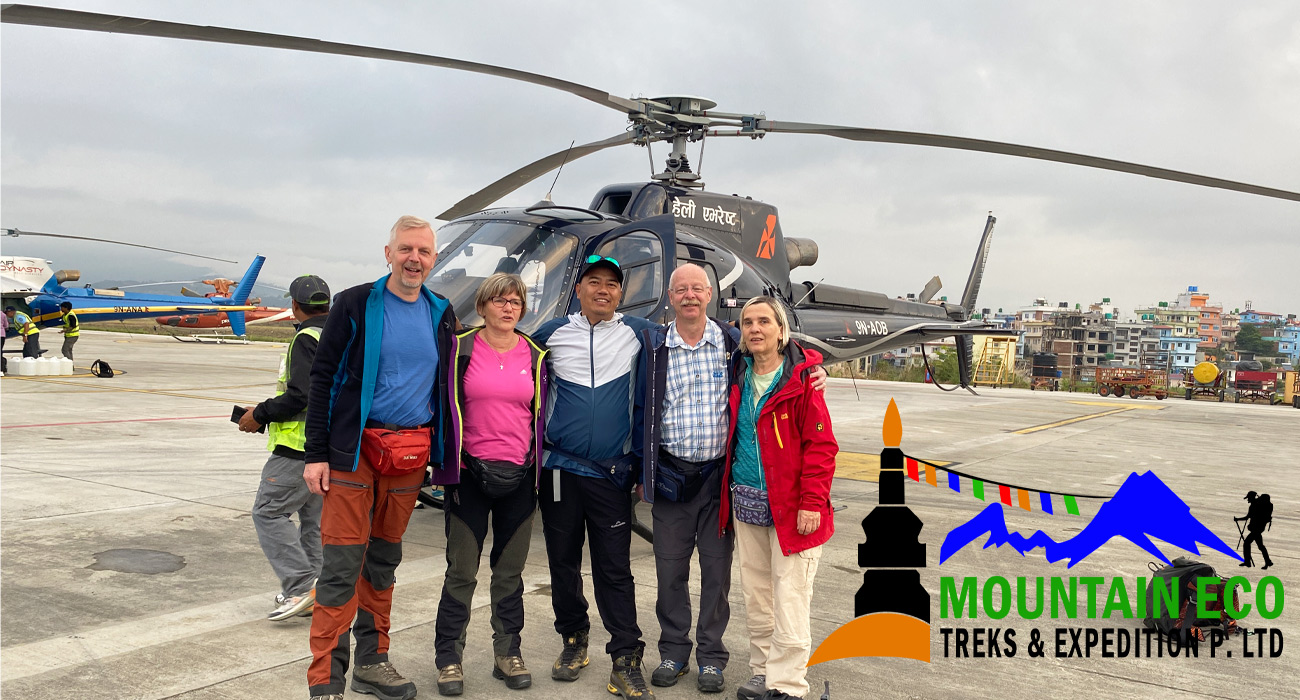
The Everest Base Camp Trek With Helicopter Return allows you to finish the walking section and then travel over the same mountain region from a completely different viewpoint.
This is not simply a shortcut.
It changes what you notice.
The Landscape Looks Completely Different From Above
On the trail, you see one valley or hillside at a time.
From a helicopter, the whole landscape opens up.
Rivers become narrow lines. Villages look tiny. Trails disappear into enormous slopes. Snow-covered peaks stretch far beyond what you could see while walking.
You may suddenly understand just how large the Khumbu region really is.
Weather Is Part of the Adventure
Mountain travel does not follow a perfect timetable.
Clouds can arrive quickly. Wind conditions can change. Visibility may become poor.
This matters even more for helicopter operations.
Flight plans must always depend on safe conditions. A flexible schedule is therefore useful when planning the return.
Leave Room for Unexpected Delays
A smart traveler does not build an important international flight around a return helicopter with zero extra time.
Weather delays can happen.
Keeping some flexibility after the trek gives you a safety buffer and reduces unnecessary stress.
Who Will Enjoy This Trek Most?
This style of Everest journey can work well for people who want the full trekking experience but have limited vacation time.
It can be especially useful for travelers who:
- Want to walk to Everest Base Camp
- Prefer not to repeat the entire trail on foot
- Enjoy mountain photography
- Have a tight travel schedule
- Want an aerial view of the Himalayas
It is still a serious high-altitude trek. The helicopter only changes the return journey.
The Real Value Is the Combination
The Everest Base Camp Trek With Helicopter Return brings together two very different ways of seeing the Himalayas.
Walking lets you experience the region slowly. You notice the sound of rivers, the feel of the trail, village life, and the effort needed to climb higher.
The helicopter gives you speed and a wider view.
Together, they create a journey that feels complete without requiring several extra days of downhill walking.
A Journey That Ends From a Different Perspective
Reaching Everest Base Camp is the achievement. The helicopter flight is the unexpected change in perspective that follows it.
You begin the journey close to the ground, one step at a time. You finish by looking down at the trails, valleys, and peaks that challenged you only days earlier.
For travelers who want the real trekking experience while making better use of their time, the Everest Base Camp Trek With Helicopter Return offers a memorable way to experience the Everest region from both the trail and the sky.
Frequently Asked Questions
Is this trek suitable for first-time trekkers?
Yes, beginners can take the trek with proper preparation, a suitable pace, and good guidance. Previous high-altitude experience is helpful but not essential.
Does the helicopter remove the difficult part of the trek?
No. You still have to walk to Everest Base Camp. The helicopter only replaces the return journey.
Can bad weather affect the helicopter return?
Yes. Helicopter flights depend on visibility, wind, and other safety conditions. Delays are possible in mountain areas.
What should I focus on during the trek?
Focus on pacing, hydration, rest, and listening to your body. Trying to walk too fast can make the high-altitude sections harder.
Is the helicopter flight worth adding?
For travelers with limited time, it can be a practical choice. It also provides a completely different view of the Everest landscape after completing the trek.